Refrigerator Repair
Sub-Zero Temperature Display Problems: Is the Number Wrong, or the Cabinet?
The figure on the panel is a sensor's opinion, averaged and rounded before you ever see it. Three separate faults arrive as one complaint — a display that is wrong, a thermistor that is wrong, and a compartment that genuinely is — and a glass of water tells you which one you have.
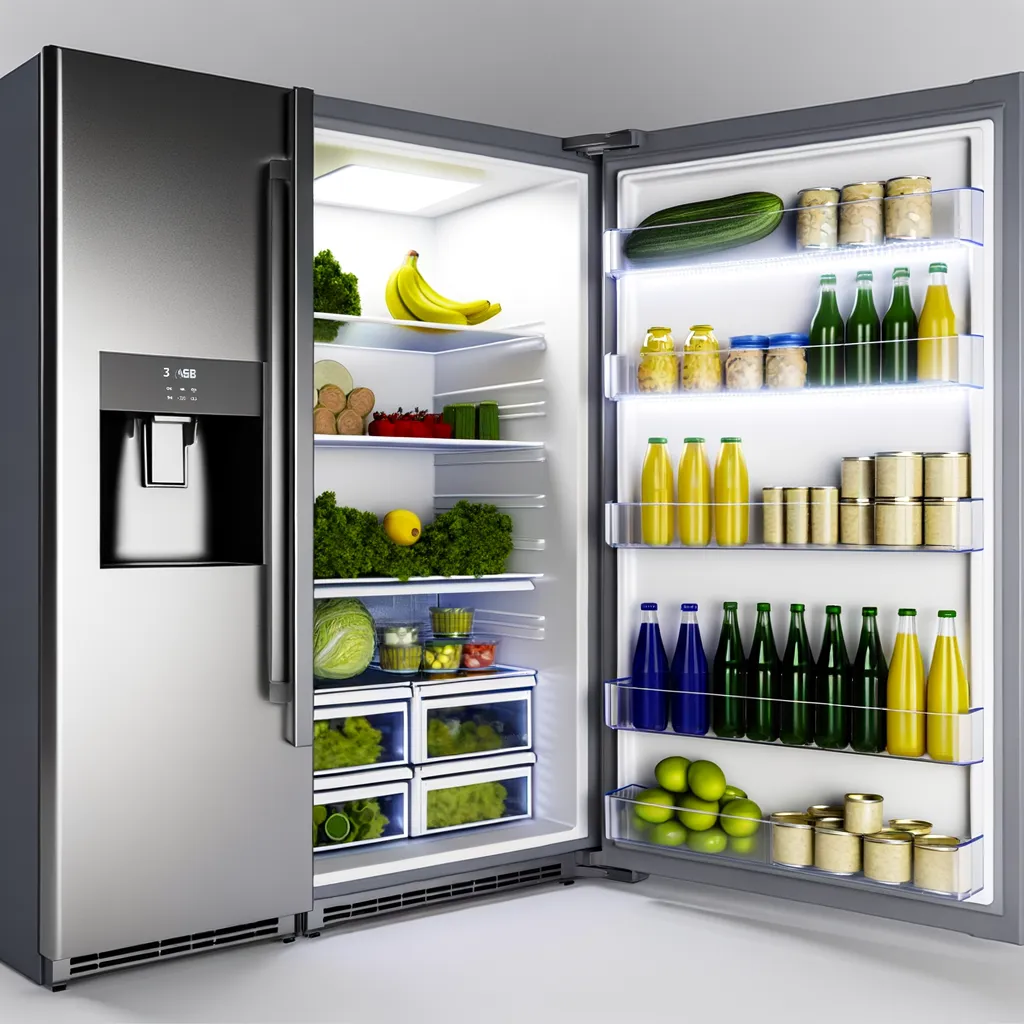
Start with what the number is, because the whole diagnosis follows from it. The panel is not reading your food. It is reporting what a thermistor somewhere in the compartment told the control board, damped and rounded on the way to the display. Three different faults can produce the same complaint, and they cost very different amounts to put right:
The display is wrong and the cabinet is fine. The sensor is wrong, so both the display and the cooling that is regulated from it are wrong together. Or the display is telling you the plain truth and the cabinet is warm. The first is the cheap end of the fault list, the second is the one that quietly spoils food, and the third is not a display problem at all.
How the number reaches the panel
A thermistor is a resistor whose resistance changes with temperature. The control reads it, converts it, averages it over a period so that the figure does not jump every time somebody reaches for the butter, and sends the result to the display. Every stage of that chain can fail on its own.
Two consequences are worth holding on to. The panel lags — a door held open while the shopping goes away shows up later, not while it is happening. And on several generations the number you see with the door shut is the setting rather than the current reading, so an owner comparing a setpoint against a thermometer is comparing two unlike things and concluding the appliance is broken.
Settle it with a glass of water
This is the test that separates the three faults, and it needs nothing but a kitchen thermometer and patience.
Fill a glass with water, stand it on a middle shelf away from the back wall and away from the door, and leave it alone overnight with normal use of the kitchen. In the morning, read the water rather than the air — water holds a steady temperature where air swings with every opening. For the freezer, slide a probe between two packs in the middle of a drawer, not in the door and not against the rear wall.
Compare. The reference points are the public food-safety ones: fresh food at or below 40°F, freezer at 0°F. If the water agrees with the panel, the display and the sensor are both honest and your complaint is about cooling. If the water is several degrees away from what the panel claims, the sensor and the display are disagreeing with reality and you have narrowed the job before anyone arrives.
Four faults, told apart
Segments missing, or the display dark, with the cabinet still cold. The information is arriving and the screen is failing to show it. Displays and their ribbon connections are a separate assembly from the control that runs the compressor, which is why this is usually far less serious than it looks and why nobody should order a main board on the strength of a blank screen.
Display steady and plausible, cabinet warm. Not a display fault. Treat it as a cooling fault and start with the not-cooling triage, because the panel is doing its job correctly and telling you something you do not want to hear.
Display wrong, cabinet right. A thermistor that has drifted, iced over, come adrift from its clip or had its lead chafed. This is the one people dismiss, and it is the one that deserves attention: the control regulates from that same reading. A sensor reading three degrees high makes the machine over-cool — lettuce frozen at the back, ice in the crisper, a compressor running far more than it should. A sensor reading low lets the compartment sit warm while the panel shows a number nobody would question.
Numbers flashing, alternating, or accompanied by an alarm. That is an alarm state rather than a reading, and the alarm is usually right about something even when it is wrong about the cause. A door left ajar, a temperature excursion after a power cut, a compartment that climbed during a defrost that did not complete — all of them surface here. Note what the cabinet was doing in the hours before it started; that history is the useful half of the diagnosis.
Power cuts and the panel that never quite recovered
A clean outage is easy. A brownout is not: a control that browns out mid-cycle can come back with a fault stored and a display that behaves oddly ever after, while the cooling side carries on perfectly well. One power cycle at the breaker is the reasonable response. Everything beyond that — an unresponsive touch panel, moisture behind the fascia, a lock mode found by accident — belongs on control panel faults, which covers the panel as a component rather than the number it is showing.
Two compartments, two machines
On a paired column installation, or a refrigerator and freezer that share one fascia, you are looking at two independent systems reporting through one piece of glass. A freezer column and a refrigerator column each have their own sensors, their own defrost cycle and their own failure modes, so a display fault on one side says nothing whatever about the other. It is a common source of confusion in the Meriam Hill and Belmont Hill kitchens where paired columns are the standard fit — one side reads oddly, the household assumes the whole appliance is going, and the fault is confined to one cabinet.
When a wrong number is urgent
Ice cream going soft while the freezer display holds at zero is the case that should not wait. So is condensation or a skin of ice appearing inside the fresh food compartment while the panel claims everything is normal. Both mean the control is being fed a reading that does not describe the compartment, and the food is paying for it.
A display that is merely dim, or a segment that has stopped lighting, on a cabinet holding perfectly good temperatures, is genuinely less urgent than it feels — but it is worth booking before it becomes the only symptom you can no longer see.
What a visit measures
Probe temperatures at several points across a full cycle against what the panel reports, the thermistor’s resistance against the figure it should be showing at that temperature, defrost behaviour, door switches and seals. That is the difference between knowing the panel is wrong and knowing why.
The service call is $95 flat and comes off the repair if you approve one. Where it lands after that depends on which of the three faults it turns out to be: defrost heater, thermostat or sensor work is published at $290 to $680, and an electronic control board at $490 to $930 — the part everyone assumes is at fault and the one that least often is. More on the appliance itself is on built-in refrigerators, and what a visit covers is set out on refrigerator repair. Ring the number at the top of this page with the model number and what your glass of water said, and the call will be short.
Still asked on the phone
The panel reads 38 and the milk at the back is freezing. Which do I believe?
The milk, every time. Food is the only instrument in the kitchen that has been in the compartment continuously, and it does not round or average. A cabinet that freezes at the back while the panel reads comfortably is the signature of a sensor reading higher than the air around it: the control believes the compartment is warmer than it is and keeps cooling to correct a problem that does not exist. Move nothing, put a thermometer on the shelf where the freezing happens, and get the reading measured against the sensor's own resistance.
Should I unplug the refrigerator to reset the display?
Cutting power at the breaker for a few minutes is worth doing once, and it clears a control that has latched into a fault state rather than one that is still being given a reason to complain. What matters is what happens next. If the odd behaviour stays away, it was a stored state. If it returns within a day, you have learned something genuinely useful — the fault is live, and repeating the reset only delays finding it. Do not make a habit of power cycling a full cabinet.
My thermometer and the panel differ by two degrees. Is that a fault?
Almost certainly not. The panel reports a damped average taken at one point in the compartment, and your thermometer reports the air at a different point after however many door openings the household has done that hour. Two degrees is placement and timing. Five or more, held over a settled overnight period with the door left alone, is worth measuring properly — and the direction matters as much as the size, because a sensor reading low lets the compartment run warm while the display looks perfect.