Refrigerator Repair
Sub-Zero vs True Residential: The Comparison Nobody Runs Until It Breaks
Both build a genuinely serious refrigerator. What separates them is not compressor quality — it is how a fault gets isolated, how many benches near Lexington have opened one before, and whether the part is on a shelf or on a truck from somewhere else.
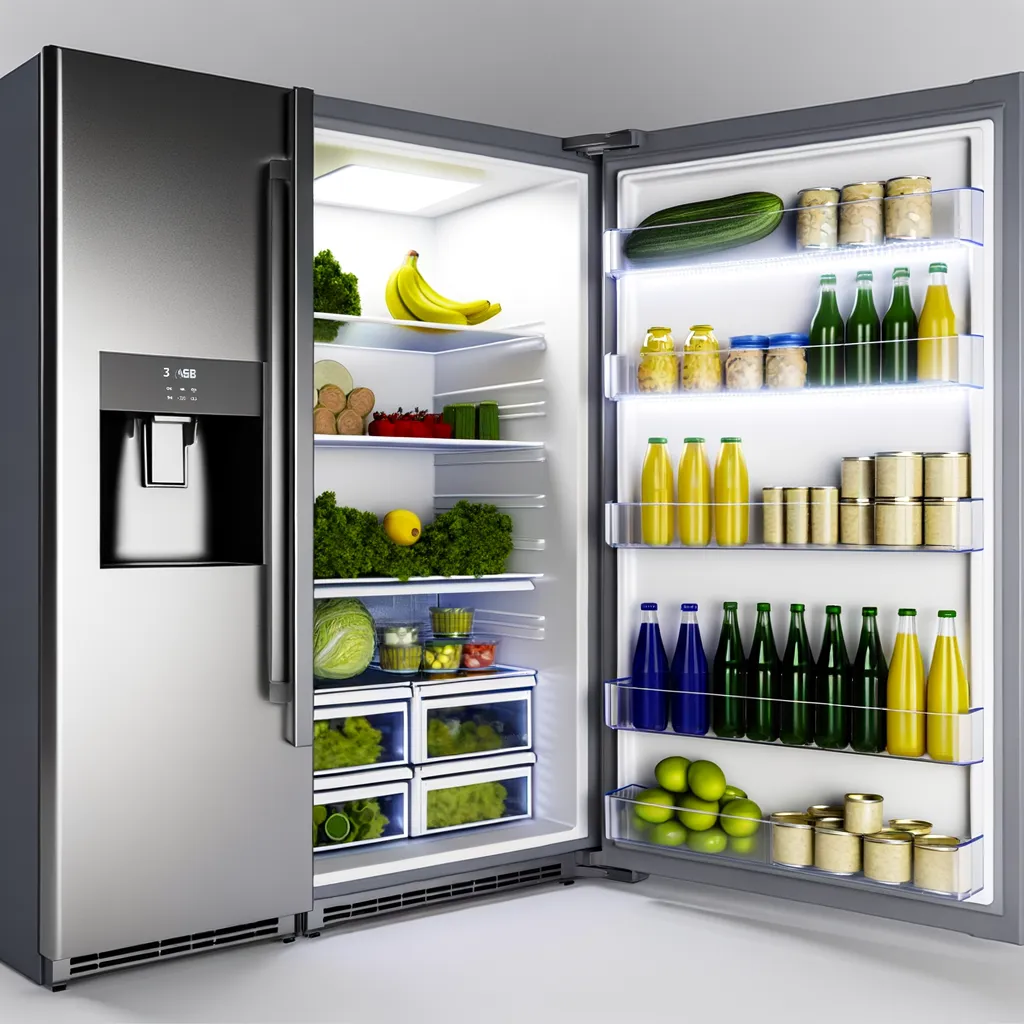
If you are choosing between them, choose on how you want to be serviced rather than on how they are built, because both are built well. A Sub-Zero classic built-in and a True residential column will both hold temperature for a very long time, and both will eventually need a technician. The difference you will feel is what happens on that day: how quickly the fault can be isolated, whether the part is sitting on a shelf within twenty miles of your kitchen, and whether the person you reach has seen your cabinet before or is meeting it for the first time.
Two different engineering histories
Sub-Zero has spent its whole existence building residential built-ins, and the architecture reflects that. The classic built-in runs two sealed systems in one cabinet — one for fresh food, one for the freezer — which is the design decision that everything else about owning one follows from. The columns and the integrated units are the same philosophy in a different body.
True came the other way round. The residential line descends from commercial refrigeration, and it carries the habits of that world: heavy hinge hardware, doors intended to be opened hundreds of times a day, a serviceability layout borrowed from equipment that lives behind a bar, and glass doors treated as a normal option rather than an exotic one.
Both histories produce a good refrigerator. They produce different repairs.
What two sealed systems mean when one of them fails
This is the single most consequential difference and it almost never appears on a comparison chart.
In a dual-system cabinet, a sealed-system failure takes out one half of the appliance. The freezer holds while the fresh-food side climbs into the forties, or the reverse. That is inconvenient, and it is also diagnostically generous: half of the machine is still running correctly, which rules out a great deal in the first five minutes. It also means the food in one compartment survives the week it takes to schedule the work.
A single-system cabinet fails as a unit. When it goes, everything in it goes with it, and the diagnosis starts from a cabinet that is uniformly warm and telling you very little.
The counterweight is honest: two systems means two compressors, two condensers and two sets of ageing components in one box. Over a long ownership that is more hardware to maintain. Which of those trades you prefer depends less on engineering than on whether you would rather have a bad afternoon or a bad month.
Parts, and the twenty-mile problem
Here is the part of the comparison that only a service bench ever raises.
Greater Boston is dense with Sub-Zero. Lexington, Belmont, Weston and Concord kitchens have been specifying it for decades, which means evaporator fan motors, defrost components, thermistors and door gaskets for the common generations move constantly through local supply. A fault diagnosed on Tuesday is frequently a part fitted the same week.
True’s residential installed base in these towns is thin by comparison. The appliance is not harder to repair — in several respects it is easier, because the commercial lineage assumes a technician will need to get at things. But a thin installed base means a part is ordered rather than collected, and it means the technician arriving has a smaller library of previous examples in his head. Neither of those is a defect. Both are a delay.
If you are buying into a brand, buy into its service density in your own town, not its reputation nationally.
The faults themselves
Strip the badges off and the fault list converges, because the physics does not care who made the cabinet.
Airflow at the condenser is first on both. A built-in set into joinery with a decorative panel over the grille runs its compressor longer, and a compressor that never stops is being aged on purpose. The evaporator fan is second — a motor that has developed a bearing whine, or has stopped entirely, produces a fresh-food compartment drifting warm while the compressor sounds perfectly healthy. Defrost is third, and it announces itself as frost sheeting on a back wall rather than as a temperature complaint.
Then the two diverge on controls. A Sub-Zero fault frequently gets read off the board, which has a diagnostic mode and a fault history, so the cabinet participates in its own diagnosis. Simpler control architectures, which is where much of True’s commercial inheritance sits, are diagnosed the older way: discrete components tested one at a time with a meter. That is slower to work through and cheaper to put right, because a discrete thermostat or relay costs a fraction of a proprietary control board.
Glass-door units add one item nobody expects: the anti-condensation heater in the door frame. When it fails, the complaint is fog on the inside of the glass, and the instinct is to blame the seal.
What the work costs here
These are this bench’s bands for Sub-Zero built-in refrigeration in the Lexington area, quoted before any work starts and after the fault is actually identified. They do not transfer to another manufacturer’s cabinet, and nobody should treat them as a True price list.
- Evaporator or condenser fan motor: $310 to $630
- Defrost heater, thermostat or sensor: $290 to $680
- Door gasket or seal replacement: $270 to $750
- Electronic control board: $490 to $930
- Compressor or sealed-system repair: $960 to $2110
The visit itself is a flat $95, which covers the diagnosis and comes off the repair once you approve it. The reason the sealed-system band sits so far above the others is the reason the dual-system question above matters: it is the one repair where the architecture of the cabinet decides how much of your kitchen is affected while you wait.
If you are choosing right now
Ask the showroom three questions and ignore the brochure. Who services this brand within twenty miles of my house. Which parts for this model are stocked regionally rather than ordered. And if the sealed system fails in year nine, how much of the appliance stops working.
Answers to those will separate the two faster than any feature list. If the cabinet already in your kitchen is a Sub-Zero, that one is ours — sealed-system diagnosis, defrost and airflow, fans, boards, seals and ice-maker plumbing, across Lexington, Belmont, Bedford, Arlington Heights and the towns on the same run. Read what a refrigerator call involves first if you want to know what a visit looks like before you book one.
Still asked on the phone
Does a dual-compressor cabinet cost twice as much to keep running?
No, and the arithmetic that suggests it misreads how the failures arrive. Two sealed systems means two of the expensive assemblies exist, but each one carries half the workload and only one of them fails at a time. The common faults on either architecture are not sealed-system faults at all — they are fans, defrost components, seals and boards, and those are counted per compartment rather than per compressor.
Is a glass door a liability in a house rather than a bar?
It is a maintained item rather than a liability. Glass units run a heater around the frame to stop condensation forming where warm room air meets cold glass, so there is a component in that door which a solid door does not have. It is also the part of the appliance most affected by where the unit sits: an undercounter glass door at the end of a sunny island works harder than the same unit in a basement bar.
We inherited one with the house and no paperwork. Where do we start?
The model and serial plate, before anything else. It is inside the cabinet on most built-ins — along an interior side wall, on the ceiling of the compartment, or behind the base grille. Photograph it. Everything downstream depends on it: which evaporator fan fits, whether that generation used a mechanical or electronic control, whether the ice maker is original, and whether parts are still moving for it at all.