Freezer Repair
Is a Noisy Sub-Zero Freezer Dangerous? Sounds Sorted by Risk
Usually not: humming, airflow, gurgling and ice dropping are a freezer at work. Grinding, a click every few minutes with the cabinet warming, or a buzz with a hot smell means a failing part, and the hot smell means switching it off at the breaker.
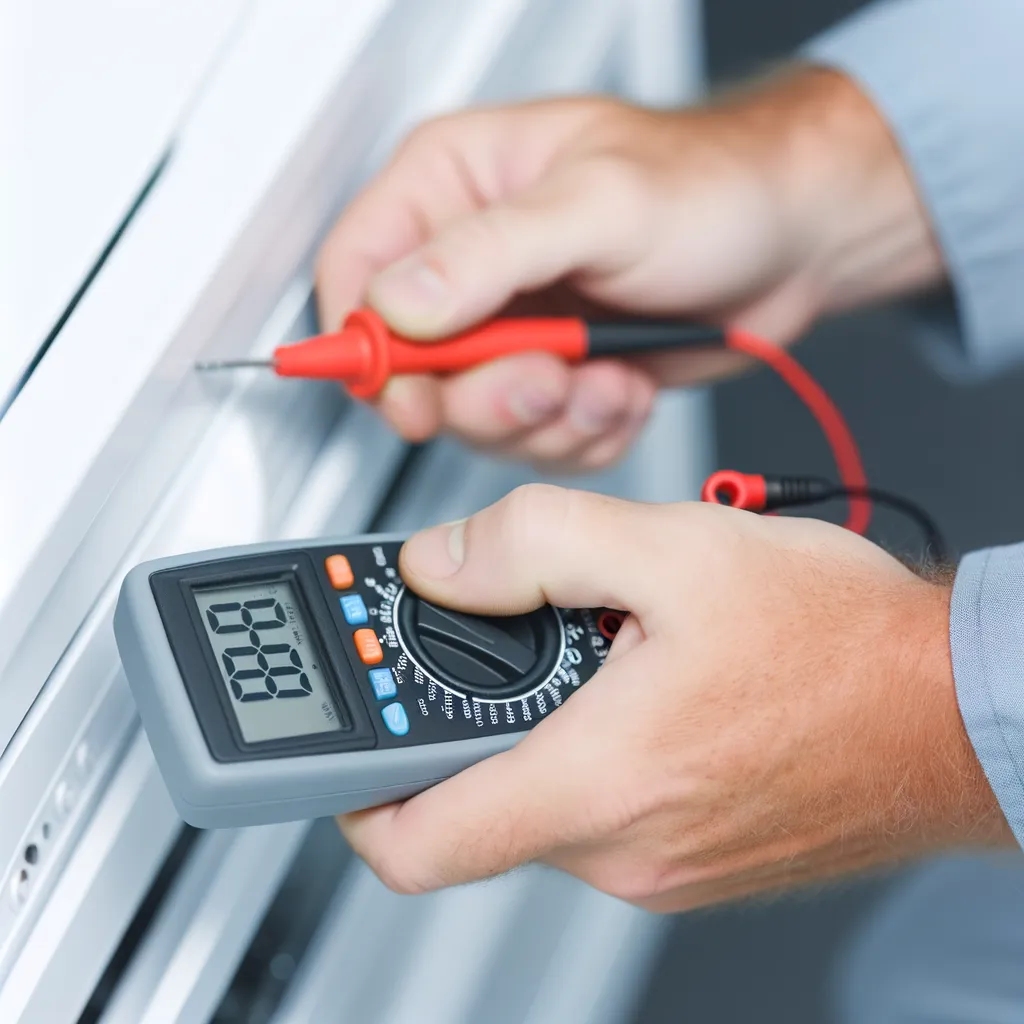
A noisy freezer is rarely dangerous. A steady hum, a whir of moving air, a gurgle after the compressor stops and the clatter of cubes landing in the bin are all a freezer doing its job. The sounds worth acting on are grinding, a rattle that never lets up, a sharp click every few minutes with no cooling after it, and any buzz that arrives with a hot or burning smell. The first three usually mean a fan or compressor part is wearing out. The last is the one reason to switch the unit off at the breaker straight away.
The quickest test is the display. Classic (CL) and Designer (DET, DEC) freezers leave the factory set to 0°F (-18°C). If yours still reads close to that, the noise is a repair to plan, not an emergency. If the number is climbing, the food clock has started. In Lexington, plenty of built-ins sit in cabinet runs laid out before column units were common, so the condenser has little room to breathe and the compressor runs longer and louder than it should.
The normal sounds of a working freezer
Most of what you hear comes from five sources, and each has its own pattern.
- The compressor. A low, even hum from the machine compartment. Variable-speed compressors speed up after a door opening or a load of warm groceries, then wind down.
- The evaporator fan. A soft whoosh behind the inner back panel. On many built-ins it pauses when the door opens, a handy way to tell whether a noise belongs to it.
- Refrigerant. Gurgling or a faint hiss, loudest just after the compressor starts or stops, as liquid and gas settle in the tubing.
- Defrost. Every so often a heater clears frost off the coil. Pops and cracks come from the liner warming and cooling, and a short sizzle is water dripping onto the heater.
- The ice maker. A buzz of a few seconds as the water valve opens, a hum from the harvest motor, then cubes dropping. Switching on Max ice on a Classic (CL), Designer (DET, DEC) or PRO model raises output as much as 30% over the next 24 hours, and some components may sound busier until it ends.
Noises that point to a failing part
| What you hear | Likely cause | What you can check | When to call |
|---|---|---|---|
| Grinding or chirping that stops when the door opens | Evaporator fan motor wearing, or ice touching the blade | Frost built up on the inner back panel | If it carries on once the frost is gone |
| Ticking or flapping from the grille or kickplate | Condenser fan hitting debris, or loose trim | Vacuum the grille area | If it returns after cleaning |
| A loud click every few minutes, then silence, cabinet warming | Compressor trying to start and failing | The temperature display | Promptly, before food warms |
| A buzz lasting a minute or more | Water valve waiting for water that never arrives | The supply valve is fully open | If ice production stops |
The control often names the fault for you. On Classic (BI) models, 35 F 33 and 35 F 34 flag the freezer evaporator fan, and 60 2 60 means no load was detected from the freezer compressor. On 600, 648PRO and 700 Series units, EC40 with Service flashing means the freezer compressor has run too long, from a door left ajar, a fan, a temperature sensor or the sealed system. For the Classic codes, Sub-Zero says to cut the breaker for 30 seconds, restore it, and call for service. Write the code down before you reset anything.
When a noise becomes a safety problem
Can a loud freezer start a fire? The sound by itself cannot. What deserves concern is noise paired with electrical signs: a smell of hot plastic or scorched dust, crackling from the base or back rather than from inside during a defrost, a plug or outlet that feels warm or looks discolored, or a breaker that trips again after a reset. Any of these means switching off the breaker and leaving it off until the machine compartment has been checked; a breaker that keeps tripping is reporting a fault.
The more common risk is to the food. A compressor that clicks but will not run, or a fan that has seized, lets the cabinet warm while you get used to the racket. Sub-Zero’s outage guidance gives a useful yardstick: an empty unit typically takes 3 hours to rise above 45°F (7°C) in the fresh-food section and 20°F (-6°C) in the freezer. Keep the doors shut, and move anything valuable to a cooler if the display keeps rising.
What you can check before calling
These checks are safe for any owner.
- Look for contact. A bottle against the back wall, a basket off its track or a panel rubbing the frame can buzz in time with the compressor.
- Look at the frost. Thick ice on the back panel or around the fan cover points to a door that is not sealing or a defrost fault. To clear it, the Classic (CL) and Designer (DET, DEC) manuals have you power down and use a hair dryer set low, never held still in one spot, while PRO Series owners are told to use a handheld steamer rather than a dryer.
- Clean the condenser. Classic (CL) models keep it behind the flip-up grille, and Designer (DET, DEC) models hide it behind a kickplate that two screws hold in place. Power down from the control panel first, put gloves on, and work a soft-brush vacuum attachment in the direction of the fins. Our annual maintenance checklist explains why it matters.
- Isolate the ice maker. Turn it off for a day. If the buzzing or grinding stops, the fault is on the ice side.
Beyond that, leave the inner panels, tubing and wiring to a technician. For sounds from the fresh-food side, see our page on a refrigerator making noise.
What a noise repair usually costs
By built-in standards, most noise repairs are modest. Typical ranges: an evaporator or condenser fan motor $310–$630; an ice maker, water valve or supply line $280–$700; a defrost heater, thermostat or sensor $290–$680. A compressor or sealed-system repair is the big one at $960–$2,110. The firm price follows the diagnosis.
A visit costs a flat $95, covering the drive out and the whole diagnosis, and that amount is credited to the repair if you go ahead. We look after Sub-Zero freezer columns and drawers across Lexington, Bedford, Belmont and Arlington Heights. If yours has started to grind, click or buzz, call (781) 790-4760 or read about our freezer repair visits.
Still asked on the phone
What should I do if my freezer suddenly starts making a loud noise?
Check the temperature first, then find where the sound is coming from. If the freezer still holds near 0°F, look for ice around the fan cover, something touching the back wall, or dust packed into the condenser grille. If it smells hot, switch it off at the breaker; if it is warming or clicking without running, keep the doors shut and call (781) 790-4760.
What does a freezer compressor sound like?
A healthy compressor makes a low, even hum that starts, runs for a while and stops. Variable-speed units shift pitch as they speed up after a door opening and settle back down later. A sharp click followed by silence, a rising whine or a knock each time it shuts off is not normal.
Should a freezer make noise all the time?
No, a freezer cycles, so there should be quiet spells between runs. A variable-speed system may run for long stretches at low speed, which is fine, but a unit that runs hard without pausing and still sits above its set point may be short of airflow or have a sealed-system fault.
Can a noisy freezer cause a fire?
The noise on its own is not a fire risk. The warning signs are a burning or hot-plastic smell, crackling from the base or back, a plug or outlet that is warm or discolored, or a breaker that keeps tripping. If you notice any of those, cut power at the breaker and keep it off until a technician has looked at it.
Is a noisy freezer worth fixing?
Usually yes, on a built-in. Fans and ice maker parts are the common culprits, typically $310–$630 and $280–$700, and even a compressor or sealed-system repair at $960–$2,110 sits well below the cost of replacing a comparable built-in. The firm price comes after diagnosis.