Ice Maker Repair
Bad Ice From a Sub-Zero Built-In in Lexington: A Diagnosis by Symptom
Cloudy, hollow, undersized and fused cubes are four separate faults, and the ice already in the bin tells you which one you have. This Lexington walkthrough reads the cube first, then works back through supply, filter, mineral load and the harvest cycle.
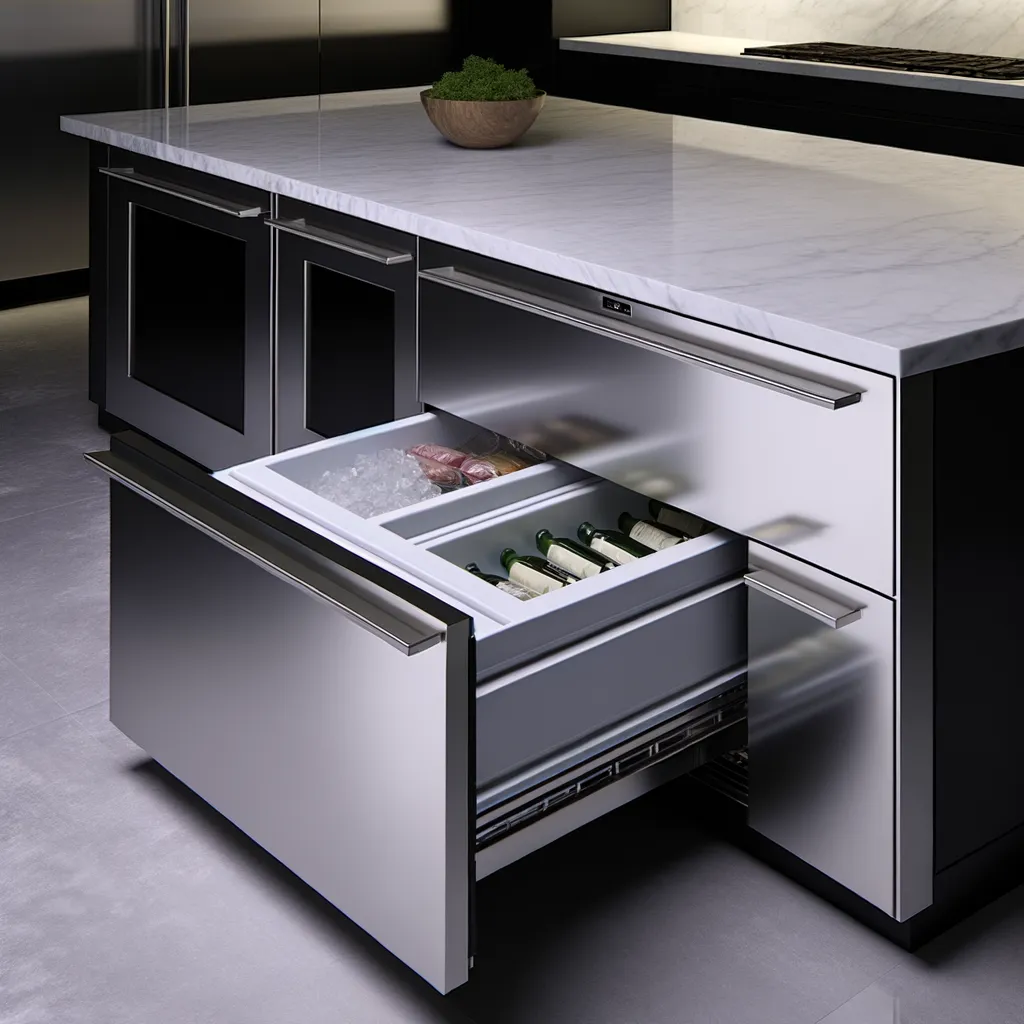
Nobody rings about ice until the ice becomes embarrassing. A tumbler of white, brittle half-shells in front of guests, or a grey slab that has to be prised apart with a spoon, is usually the first anyone notices of something that shifted weeks earlier. The useful part is that the evidence is already sitting in the bin, and it is unusually specific about where to look next.
Read the cube before you touch the appliance
Carry a handful into daylight before you open a single panel. Four faults leave four different cubes. A dished or hollow shell says the mould took on less water than the cycle was expecting. A white, opaque cube says dissolved air and minerals came out of solution as the water froze. A welded slab says the batch sat too long before it was released. A small cube that is otherwise clean and clear says the freeze is being cut short rather than starved.
That last one gets folded into the others constantly, and it deserves to stay separate. Clarity and size are governed by different mechanisms, so a cube that is perfectly transparent and simply too small is not a water-quality complaint at all.
Lexington makes this reading easier than most places, because so many kitchens here have been through a rebuild. A Meriam Hill kitchen enlarged five years ago, or a Bedford open-plan run carrying panel-ready columns, has had its plumbing moved, capped and reconnected at least once by at least two trades. When the character of the ice changed shortly after work was done in the house, the appliance is rarely the thing that changed.
The water side, checked before the machine
Start outside the cabinet. The commonest single cause of a hollow shell in a built-in is a supply that never fully reopened after somebody worked on it. A stop turned back most of the way, a saddle fitting that was never meant to be a permanent arrangement, or a soft copper tail crushed when the unit was pushed home will each pass enough water to look connected and nowhere near enough to fill a mould on schedule.
The logic is worth spelling out, because it explains the symptom exactly. Fill is timed rather than measured. Drop the pressure behind the valve and the same number of seconds delivers less water, the mould fills part way, and what freezes is a thin-walled cup with a sunken top. Nothing inside the appliance has failed. It is being fed less than it asked for and it has no way to complain.
What you can check safely: find the stop that feeds the unit, confirm it is fully open rather than nearly open, and look at the tubing where it turns behind the cabinet for a kink or a hard bend. In Arlington Heights, and in the older Belmont two-families around Waverley, that run vanishes into a gap with almost no clearance, and the line has been asked to turn more sharply than it should. If you cannot see it without pulling the unit out, leave it there.
When was it last changed?
Taste is a poor witness. A cartridge reaching the end of its useful life throttles flow well before anything tastes different, so a household perfectly happy with its drinking water can still be running an ice maker on a fraction of the supply it was designed around. If the cartridge has been in longer than you can comfortably account for, that is the first thing to change.
Aftermarket cartridges complicate the picture. One can fit the housing correctly and still not pass water at the rate the original was specified to, which produces the underfilled shell described above and reads on the bin like a mechanical fault. Some units will run in bypass with nothing fitted; if output recovers in bypass, you have learned something real about flow, but treat that as a test result rather than a way to live.
The replacement interval itself depends on the series and on how much water the household actually draws, so take the figure from the guide that came with your model rather than borrowing one from a neighbour’s appliance.
Hard water, in the parts you cannot see
Mineral content does two things over time and only one of them is visible. The first is cloudiness. The more dissolved solids the water carries, the more of them are pushed ahead of the advancing freeze and trapped in the middle of the cube, which is why a milky core inside clear edges is ordinary physics rather than a warning.
The second is slower and considerably worse. Scale settles on every surface the water touches on every cycle, and it accumulates gradually enough that nobody ever connects this month’s ice to last year’s ice. It presents as an appliance that has been getting quietly poorer for a long stretch, rather than one that failed on a particular Tuesday.
If the house runs a softener, that is its own conversation. Softened water behaves differently again, and whether this appliance is fed from the treated side or from an untreated bypass is worth establishing before anyone blames the machine. Plenty of houses in Belmont and Bedford have both arrangements in the same basement, plumbed by different hands in different decades.
Harvest: making ice and letting go of it
Harvest is the second half of every cycle and the half most owners have never heard named. The mould freezes a batch, and then the appliance has to persuade finished cubes to release and drop into the bin, which takes a brief warming at the mould surface followed by a mechanical push. Making ice and releasing ice are two separate jobs and they fail separately.
Welded slabs almost always belong to the second job. A batch held past the moment it should have been ejected simply keeps freezing, neighbouring cubes bridge to one another, and what arrives in the bin is a sheet. Low turnover produces the same result at the other end: cubes that sit for weeks in a household that only reaches for ice in July will fuse to each other with nothing whatever wrong with the mechanism.
From the kitchen you can observe two things. Does the ejector move at all through a cycle, and does the sensing arm swing freely rather than resting on a heap of old ice? Past that point, stop. The rest of the assembly is not something to diagnose by hand, and our Ice Maker Repair page sets out what the work usually involves.
Handing it over
Three findings end the do-it-yourself stage on the spot: water on the floor, a supply line that is wet where it ought to be dry, and a compartment that is no longer holding its temperature. The last of those outranks the ice entirely and should be treated as the actual call.
What a visit establishes is precisely what a homeowner has no means to measure: how much water genuinely enters the mould, what the pressure behind the inlet valve does under load, and how long a cycle actually runs against how long it is supposed to. The service call is $95. The published band for ice maker, water valve or supply line work runs $280 to $700, and which end of it applies depends on what those measurements turn up. Belmont, Meriam Hill and Bedford are all covered from here. Two routes reach us and both sit at the top of this page: ring the number, or use the booking link.
Still asked on the phone
How often should the water filter be changed?
There is no universal figure worth trusting. The interval printed in your model's guide assumes a certain volume of water, and a household that drinks and chills heavily reaches that volume sooner than one that does not. Treat the guide's number as a ceiling rather than a target, and change earlier if output has slipped, because flow falls long before taste does.
The cubes have started fusing into a block — what changed?
Fusing points at the release side of the cycle or at how quickly the bin empties, not at freezing capacity. Either the batch is being held past the moment it should have been ejected and keeps freezing until neighbouring cubes bridge, or nobody has drawn ice for weeks and the pile has slowly welded to itself. If the bin turns over normally and slabs still arrive, the timing is worth having looked at.
Why does output drop in summer?
Because demand rises and conditions worsen at the same time. Production is rated over a twenty-four hour period, and it falls when the compartment is opened frequently or packed so full that air cannot circulate — both of which describe a busy Lexington kitchen in July. The appliance has not weakened; it is refilling a bin that is being emptied faster than it was in February.