Ice Maker Repair
Sub-Zero Ice Maker Slow Production: Why the Count Falls
Slow ice is a heat problem far more often than a water problem. The cubes look right, there are simply fewer of them. Here is how to measure a real day of output, and the four things that quietly reduce it in a built-in.
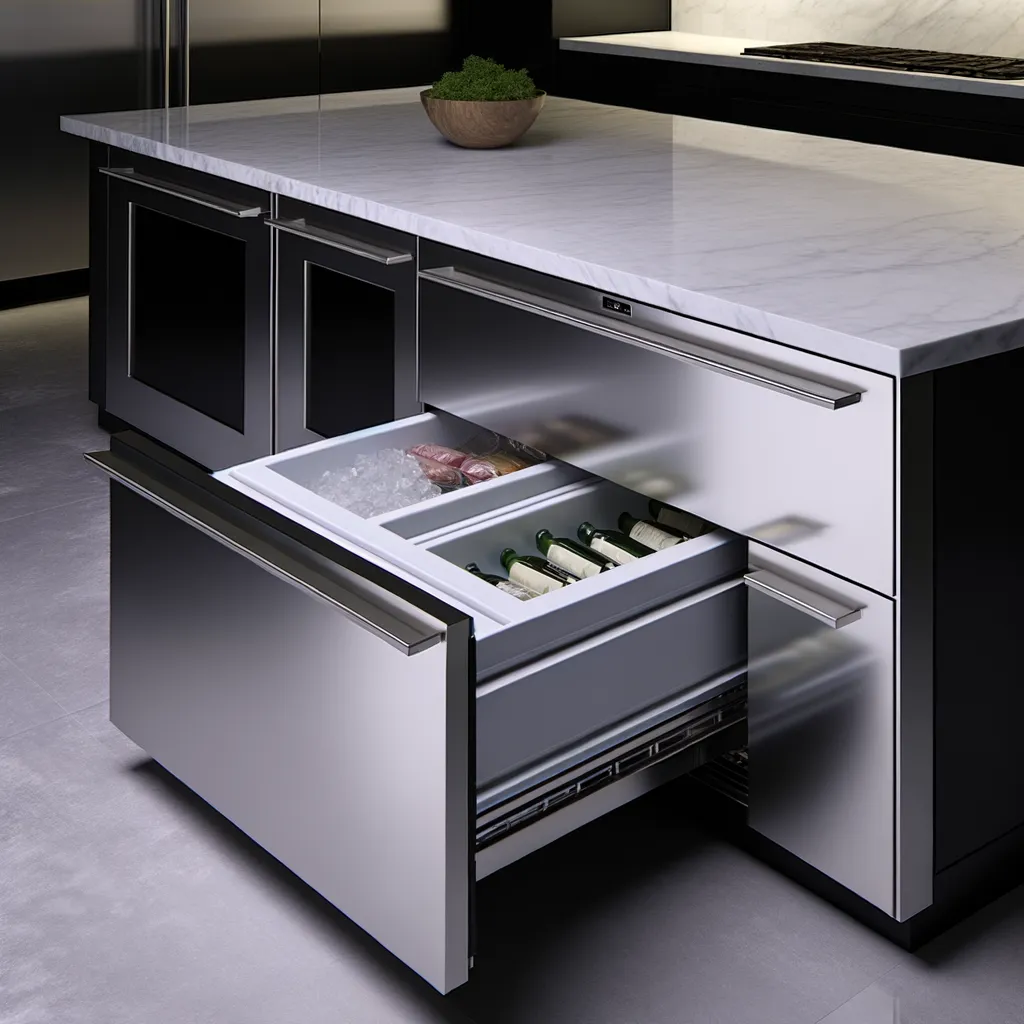
Slow production is a heat problem far more often than a water problem. That is the conclusion, and it belongs at the top because almost every household starts at the filter and stops there. A starved supply changes what a cube looks like: thin-walled, dished, hollow at the crown. A warm compartment or a smothered condenser changes how many cubes arrive and leaves every one of them perfectly formed. So if the ice in your bin is good ice and there is simply not enough of it, the plumbing is the wrong place to begin.
Measure a day before you judge it
Nobody has ever counted their ice, which means nearly every report of slow production is a memory of a bin that used to look fuller. Memory is a poor instrument here, because household demand swings enormously between February and July and the appliance does not.
Do this instead. Empty the bin completely, write down the time, and leave it alone for a full twenty-four hours. Take the reading at the same hour the next day, and note two things: roughly how much ice is in the bin, and whether the cubes are properly formed. Those two numbers answer different questions. Volume tells you about the freeze; shape tells you about the fill. A machine producing well-shaped cubes at half its usual volume has a thermal complaint. A machine producing the usual number of misshapen ones has a supply complaint, which is a separate piece of work described in our note on diagnosing bad ice by symptom.
Do the test in an ordinary week, too. A house with guests, a party, or three teenagers home from school is not a controlled experiment.
Heat, arriving from outside the cabinet
An ice maker is the last thing in the compartment to get what it needs. Food is already cold and stays cold; ice has to be made from scratch on every cycle, so it is the first function to suffer when the cabinet’s ability to shed heat drops even slightly. Everything the appliance removes from inside has to leave through the condenser, and if that heat cannot get away, the batch takes longer.
Two things get in the way, and both are ordinary rather than dramatic. The first is dust. A condenser gathers a felt of it over a year or two, and the machine does not fail when that happens: it simply works longer for the same result, and the ice count is where you notice first. The second is the joinery. A great many Lexington kitchens have been enlarged around the appliance rather than for it, and a grille half hidden behind a decorative panel, or a cabinet run built tight to a return wall, will recirculate the same warm air the unit just rejected.
Kitchen conditions add to it. An open-plan Bedford kitchen with south-facing glass, a range running through a July evening, and a cabinet standing next to a wall oven is a harder environment in summer than the same cabinet is in January. The appliance has not weakened. It is being asked to do the same job against a warmer wall.
The temperature you cannot read off the display
The number on the panel is a target, not a measurement of the space where ice is made. Set points and actual compartment temperatures separate slowly and quietly, and a freezer sitting a few degrees above where it thinks it is will still keep food frozen, still look normal, and still make noticeably less ice.
The check is cheap. Put a standalone freezer thermometer in the compartment, near the ice maker rather than in a door shelf, and leave it overnight. If the reading and the display disagree, the ice count is a symptom of that disagreement and chasing the ice maker itself will waste an afternoon.
A few things push the compartment warm without breaking anything: a drawer or door not quite pulling shut against its gasket, a compartment packed to the walls so air cannot circulate, or frost building on the back panel where the evaporator sits. Frost is worth taking seriously. It grows for a reason, it insulates the coil from the air it is meant to be chilling, and the ice maker is downstream of that loss. Our freezer repair page sets out what that work involves.
When the bin stops the machine
Production also stops for a reason that is not a fault at all: the appliance believes the bin is full.
Every design has a way of knowing when to stop, whether that is an arm resting on the pile or a beam of light across the bin. Both are easily fooled. A heap that has drifted to one side, a bag of frozen fruit sitting where it should not be, a bin pushed back out of its seat, or a mound of old fused cubes propping the arm up will all persuade the machine that its work is done. It stops, the household draws ice from the top of the pile, and nobody connects the two.
Level the pile with your hand, make sure the bin is fully home, and check that nothing has been stored in it. If output recovers over the next day, that was the whole story.
What is left, and who should look at it
Past that point the useful work is measurement, and measurement is where a homeowner runs out of tools. How long a cycle actually takes against how long it should, what the compartment holds under load rather than at rest, how much heat the condenser is genuinely rejecting, and whether the harvest is releasing on time or overrunning — none of that can be judged by eye, and guessing at it is how good parts get replaced.
Three findings should end the do-it-yourself stage immediately: water anywhere it should not be, a compartment that is no longer holding food properly frozen, and a machine that has stopped entirely rather than slowed. The second of those outranks the ice completely.
The visit is $95, flat, covering the diagnosis. Where it turns into work, the published band for ice maker, water valve or supply line repair runs $280 to $700, and an evaporator or condenser fan motor runs $310 to $630 — which of those applies is exactly what the measurements decide. Belmont, Bedford, Arlington Heights and Meriam Hill are all standing ground for this bench. Phone the workshop or book online, and open with your twenty-four hour reading — that one sentence saves the first half hour of the visit.
Still asked on the phone
I emptied the bin and it has not caught up in an afternoon. Is that normal?
Almost certainly, yes. A built-in ice maker works in batches, and a batch has to freeze solid before it can be released, so an empty bin is refilled over a day rather than over a few hours. Emptying a bin and checking it after lunch tells you nothing at all. Empty it, note the clock, and look again at the same time tomorrow. That single reading separates a machine that is slow from a household that simply used a lot of ice at once.
Does a full freezer slow the ice maker down?
It can, and it is one of the easiest things to put right. Cold is moved around the compartment by a fan, and a compartment packed to the walls has nowhere for that air to travel. The ice maker sits in the path of that airflow, so it feels a packed freezer before the food does. If the count dropped after a big shop or after the holidays, take a shelf back to breathing room and give it a day before you look for a fault.
Will a new water filter increase production?
Only if flow was the thing holding it back, and flow usually announces itself in the shape of the cube rather than the number of them. If your cubes are full and well formed and there are just fewer arriving, a new cartridge is unlikely to change the count. Change it because it is due, not as a fix, and judge the result over a full day rather than an evening.