Ice Maker Repair
Why Is My Ice Maker Making Hollow Ice Cubes?
A hollow cube means the mould was given less water than the fill was written for, and the cause sits on the supply line nine times in ten. Five places the flow disappears, the one exception that is not a water fault at all, and the checks that separate them in an evening.
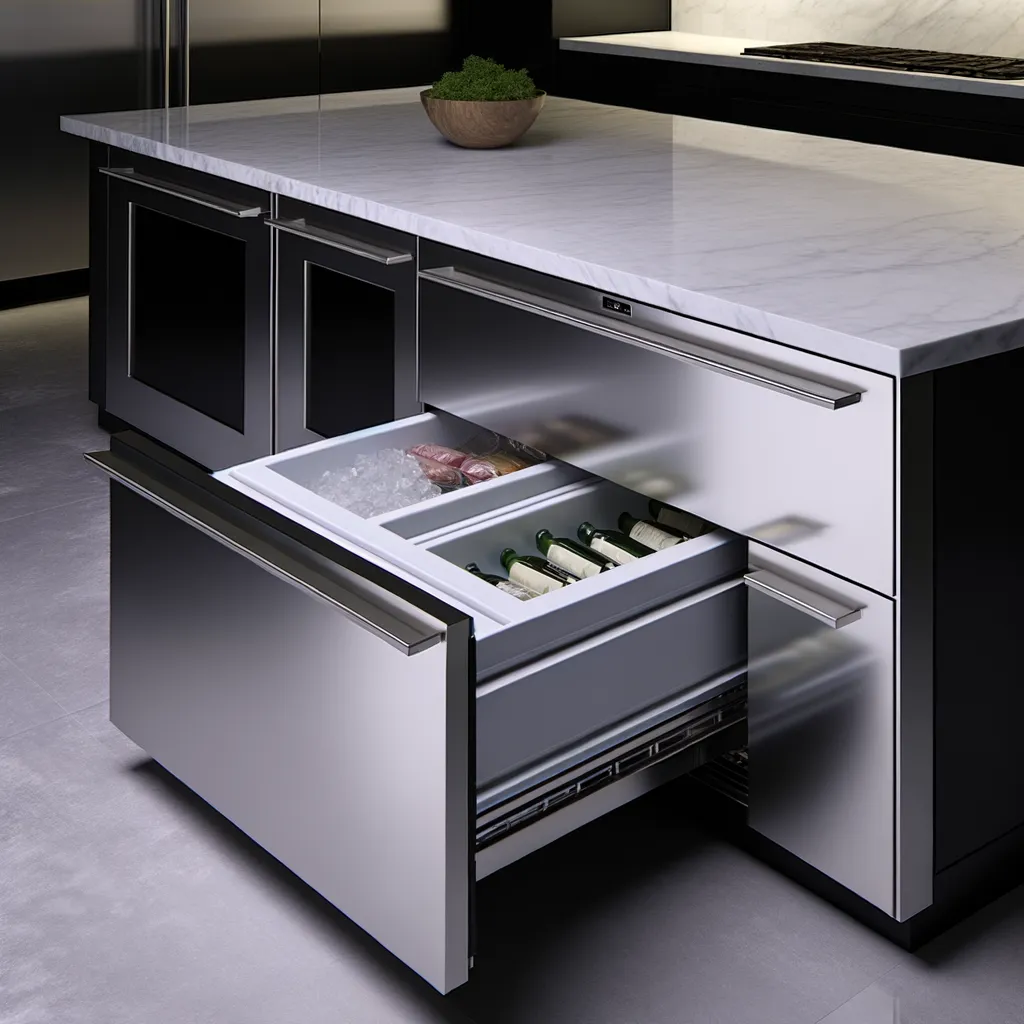
A hollow cube is a water-volume fault. The mould received less than the fill cycle was written to deliver, and what froze was a wall with nothing behind it. Almost nothing you can do to the freezer will change that, which is why turning the temperature down is the most common wasted afternoon in this fault.
That single sentence closes about eight of every ten of these calls. The rest of this page is how to find where the water went missing, and how to recognise the one version of a hollow cube that has nothing to do with the supply.
Three different cubes get called hollow
Carry a few into daylight and look at them properly, because the word covers three shapes and they do not all mean the same thing.
A cube with a sunken or dished top is the mildest version. The mould filled most of the way, froze from the outside in, and the last of the water contracted as it turned to ice with nothing left to top it up.
A thin-walled shell that collapses under a spoon is the same fault, further along. Considerably less water arrived, the wall it formed against the mould is all there is, and the middle was never occupied.
A cup with a hole in the bottom and a wet inside is the odd one out. That is not a fill problem — it is a batch released before the middle had frozen, and the liquid centre ran out on the way to the bin. It gets its own section below.
Why less water builds a shell rather than a smaller cube
Ice forms against the coldest surface first, which is the wall of the mould, and it grows inward. Give the mould its full charge and the freeze meets itself in the middle. Give it two-thirds and the same wall forms, the same freeze begins, and it runs out of water to advance into.
The fill itself is the piece most owners have never had explained. The appliance opens a valve and holds it open for a set period. It is counting seconds, not ounces. Nothing downstream measures whether the mould actually filled, so anything that reduces the rate of flow reduces the charge by exactly that proportion, silently, on every cycle, for as long as the restriction lasts.
That is the whole mechanism, and it is why this fault is nearly always found upstream of the appliance rather than inside it.
Five places the flow goes missing
Work them in this order — they run cheapest and most accessible to worst.
One: the pressure in the house. Run a nearby cold tap and see whether it is what it used to be. A property on a well with a pressure tank that has lost its air charge will cycle low, and the appliance is fed whatever happens to be in the line at that moment. If every fixture is weak, the ice maker is a symptom rather than the patient.
Two: the isolating stop. Somebody has worked behind that cabinet — a plumber, a floor fitter, the crew who installed the appliance — and a stop turned back most of the way looks identical to one turned back all the way. It passes enough water to prove the line is live and nowhere near enough to fill a mould on schedule. Where the character of the ice changed within a month or two of any work in the house, start here and do not bother with anything else until you have.
Three: a saddle valve. The self-piercing type clamped onto a copper line was a quick answer at installation and it is a slow problem afterwards. The pierced hole is small, it silts up, and it cannot be cleaned out. Any ice maker fed by one has a restriction waiting for it.
Four: the filter cartridge. Flow falls off long before taste does, so the household can be perfectly content with its drinking water while the ice maker is running on a fraction of the supply. Cheap third-party cartridges add a second failure of their own: the body seats properly in the housing, the media inside restricts far more than the original did, and nothing about the fit warns you. If the unit accepts a bypass plug, running bypass for a couple of days is a genuine diagnostic — if the cubes recover, the restriction was in the cartridge. It is a test, not a way to live.
Five: the inlet valve on the appliance. Last on the list because it is the only one behind a panel. A fine screen sits at its inlet and collects whatever the line delivers; scale settles on the seat over years. A valve with scale on the seat neither opens fully nor closes fully, which is why one appliance can produce shells and a slow drip at the same time — thin cubes in the bin and a sheet of ice underneath them.
The exception: a harvest that starts early
If the cube is a cup with a hole and the bin has water in it, the freezing side is not being starved. The batch is being released before it is finished. Releasing ice takes a short burst of warmth to break the bond at the mould wall, then a shove from the ejector, and when that sequence arrives ahead of schedule the middle of each cube is still liquid and simply runs away.
You can tell this apart from a fill fault without tools. A starved fill gives you dry, light shells and a dry bin. An early harvest gives you wet ice, cubes stuck to the ramp, and often a puddle at the bottom of the bin that refreezes into a plate. That is a control and timing question rather than a plumbing one, and it belongs to somebody with the machine open.
Ten minutes of checks, in order
- Look at the shape and decide which of the three cubes you have.
- Run a cold tap nearby and judge the pressure against what the house normally does.
- Find the isolating stop that feeds the appliance and confirm it is fully open, not nearly open.
- Work out how long the cartridge has been in, and change it if nobody can say.
- Follow the feed tube as far as you can see it and look for a crushed section or a bend tighter than the tubing wants — in the older Belmont two-families around Waverley that line vanishes into a gap with almost no clearance at all.
- Empty the bin completely and note the time, so the next batches are unambiguously new ice.
- Give it forty-eight hours before you form a view.
If the cubes come back, one of the first five links in the chain was the answer and it cost you a cartridge at most.
Where it stops being a homeowner’s job
If the supply checks come back clean and the shells keep arriving, the remaining candidates are the inlet valve, the fill timing and the harvest sequence, and all three need the appliance opened and measured rather than guessed at. Water on the floor or a supply line that is damp where it should be dry ends the do-it-yourself stage immediately.
A visit measures the pressure at the cabinet under load, times a fill against what that model is supposed to deliver, and runs the harvest end to end. The service call is $95 flat, credited against the repair once you approve one, and the published band for ice maker, water valve and supply line work is $280 to $700 depending on which of those turns out to be the fault. Bedford, Belmont, Arlington Heights and Meriam Hill are all inside the regular run.
If you want the wider version of this — cloudy cubes, undersized cubes and welded slabs alongside hollow ones — the full walkthrough on reading a cube takes each in turn, and the shorter cause-by-cause summary is on ice maker problems. To book, the number and the booking link are both at the top of this page.
Still asked on the phone
Will a new filter cartridge fix hollow cubes on its own?
Often, and it is the cheapest thing to try, but only after you have confirmed the isolating stop is fully open — a new cartridge behind a half-shut valve changes nothing and costs you a fortnight of waiting to find out. Give it two full days after the swap before you judge, because the first batches are made from water that was already sitting in the line. If shape has not recovered by then, the restriction is somewhere else and the cartridge was not the story.
The ice maker is fed from a reverse-osmosis tap. Does that matter?
It can matter a great deal. An RO system delivers through a small storage tank rather than straight off the main, and once the bladder in that tank loses its charge the pressure at the appliance falls away as the tank empties. The symptom is characteristic: the first batch after a quiet night is respectable and every batch after it gets thinner. Have the tank pressure checked before anyone opens the refrigerator, and compare the appliance's stated minimum supply pressure against what the RO tap actually delivers.
Could the freezer simply be too warm?
Not for this symptom. Cabinet temperature governs how fast a batch freezes and how many batches a day you get, not the shape of the cube. A compartment running warm gives you fewer cubes, cubes that arrive slowly, and eventually cubes that fuse because the batch sits too long — a shell means the mould was not full when the freeze began. Turning the freezer colder is the most common wasted move in this whole fault, and it can push the fresh-food side into freezing your salad instead.